

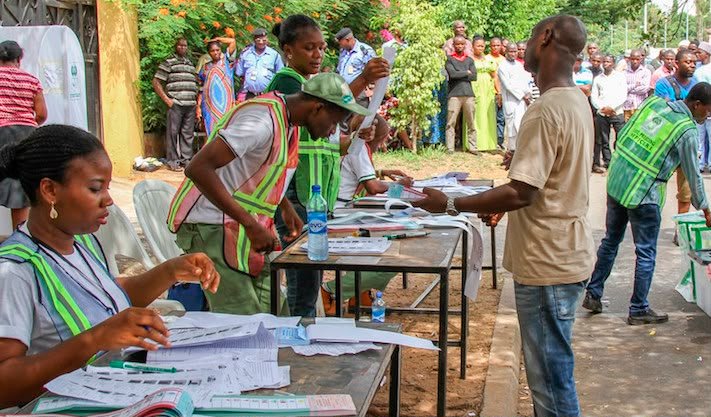
September 26 was supposed to be a voting day in Imo State.
Across the state’s 27 local government areas, voters were expected to choose chairmen and councillors. Candidates had campaigned, political parties had mobilised, and residents knew the date.
Then, just days before the poll, everything changed. The Imo State Government postponed the local government election indefinitely.
Now there is no new election date, while the tenure of the present councils is approaching its end. That leaves Imo with a question that goes beyond political parties and candidates: what happens when local government has no election?
The postponement came amid a legal challenge by the All Progressives Grand Alliance, APGA.
The party approached the Imo State High Court, challenging aspects of the electoral process. Among its arguments was that the 360-day notice issued by the Imo State Independent Electoral Commission did not contain the actual election date. APGA also raised questions concerning the voters’ register and compliance with the Electoral Act 2026.
Those remain arguments before the court, not findings of the court. The High Court did not order the postponement. The state’s Attorney-General, Paul Obinatu, told the court that the government had decided to postpone the election, citing the legal issues surrounding the process. The case was subsequently adjourned until October 30.
So the legal battle continues. But another clock is running.
Reports indicate that the current elected chairmen and councillors are due to complete their two-year tenure around the end of September. With the election no longer holding on September 26, the state now has to decide what happens between the departure of the present councils and the arrival of new elected officials.
That is where the matter becomes more serious.
The Imo State House of Assembly has reportedly begun considering an amendment that could provide for interim management committees to run the councils until another election is conducted. The stated concern is to prevent a vacuum in local administration.
But preventing a vacuum is only one side of the question. Who fills the space, under what authority and for how long?
Nigeria has already had a major constitutional debate over this. In 2024, the Supreme Court reaffirmed the constitutional requirement for democratically elected local government councils in its judgment on local government autonomy. The judgment also addressed the use of caretaker arrangements in place of elected councils.
That makes the present situation one that deserves careful attention. Local government is not supposed to be government people hear about only during elections. It is the level closest to the road that needs fixing, the market that needs attention, the community that wants a government response and the resident who wants to know who is responsible.
For the ordinary voter, the chairmanship contest may not be as glamorous as a governorship race. But the consequences of local administration can sit right outside the person’s door.
Former Anambra governor Chukwuemeka Ezeife was among those who argued for stronger local government independence, reflecting a long-running Nigerian debate over how much control councils should have over their own affairs.
That debate has refused to fade. Neither should the question of who speaks for the people at the grassroots.
There is nothing unusual about an election being challenged in court. Political parties have a right to question an electoral process, and electoral bodies have a duty to explain their decisions.
The important thing now is clarity. Will a fresh election timetable be announced? Will the process start again? What happens to candidates who have already spent money campaigning?
What happens to voters who were preparing to vote? And what happens to the councils when the current elected officials leave?
These are not questions for political insiders alone.
A trader does not need a constitutional lecture to know that a functioning council matters. A community does not need a party membership card to know when its road is bad. A resident does not have to be politically active before asking who has the authority to act.
As the Igbo saying goes, “Onye kwe, chi ya ekwe.” (When a person decides to act, the path opens.)
For Imo’s local government system, the next action must be clear.
The court will handle the case before it. Political parties will pursue their interests. The government will make its decisions.
But the people still need to know who will govern their councils, under what law and for how long.
September 26 may have disappeared from the electoral calendar. The need for accountable local government has not.









Leave a comment