

Investment is rarely driven by emotion alone. A person may love Nigeria, miss home and want to contribute to its growth, yet still hesitate when the business environment makes every naira harder to protect.
That is the difficult question behind Nigeria’s renewed appeal to its citizens abroad: if Nigerians in the diaspora bring their money home, what kind of environment will they meet when they arrive?
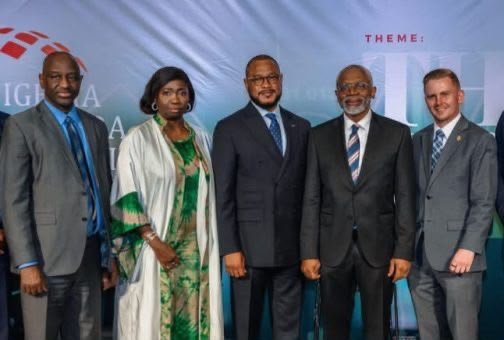
At the Nigeria Diaspora Economic Conference in Toronto, President Bola Ahmed Tinubu called on Nigerians abroad to move beyond remittances and put their money into productive investments in Nigeria.
Chief of Staff Femi Gbajabiamila represented the President at the August conference, held under the theme, “Thrive Abroad, Invest in Nigeria.”
The message was clear. Nigeria wants diaspora capital to play a larger role in creating businesses, jobs and economic opportunities.
But an investment invitation is only as convincing as the conditions surrounding it.
NiDCOM says Nigerians in the diaspora contribute more than $20 billion annually. The same conference also recognised some of the concerns that could discourage investment, including regulatory difficulties, information gaps, project credibility and perceived risks.These concerns cannot be treated as minor complaints.
For an investor, electricity is a business cost. Security is a business cost. Taxes, interest rates, transportation and fuel are all business costs.
When several of these expenses rise together, the question is no longer simply whether an opportunity exists, but whether the opportunity can remain profitable.
Electricity remains particularly important. The Central Bank’s November 2025 Business Expectations Survey identified insufficient power among the major constraints facing businesses, alongside insecurity, multiple taxes and high interest rates.
Industrialist Aliko Dangote made the connection plainly in February 2026 when he said, “Power means growth. No power, no growth.”
That reality reaches far beyond factories. Businesses that depend on generators must absorb fuel, maintenance and equipment costs. Those expenses eventually find their way into the prices paid by consumers.
Fuel itself has become another pressure point. Reuters reported in September that petrol prices had reached about ₦1,400 per litre in Lagos and Abuja, while diesel prices had risen above ₦2,000. For businesses dependent on transportation, logistics or private power generation, such increases can quickly affect operating costs.
Security presents another concern. CBN business surveys have repeatedly identified insecurity as a major constraint.
For investors, insecurity can disrupt transportation, discourage customers, damage infrastructure and make expansion more difficult.
The tax environment also matters. Businesses can plan for taxes when obligations are clear and predictable.
Multiple levies or uncertainty over what is payable can make that planning harder, particularly for smaller companies trying to survive in a difficult market.
Then there is institutional confidence. Transparency International’s latest country data gives Nigeria a corruption score of 26 out of 100, placing the country 142nd among 182 countries.
Such figures form part of the wider conversation about the strength of institutions and the confidence investors place in them.
Corporate decisions, however, require careful interpretation.
Uber ended its Nigerian operations in September 2026 after 12 years, following a review of its business operations. Other multinational companies have also adjusted their Nigerian operations in recent years, but their circumstances have not been identical.
Exchange-rate pressures, operating expenses, market conditions and global corporate strategies can all influence such decisions.
Nigeria should therefore resist the temptation to explain every corporate exit with one argument.
There is still considerable economic opportunity in the country. Its population, consumer market, entrepreneurs and growing businesses continue to attract investment.
The challenge is turning that potential into an environment where investment can survive and expand. That requires more than conferences.
Nigeria needs dependable electricity, clearer taxation, stronger security, predictable regulations and institutions that can settle commercial disputes efficiently.
These are not special privileges for investors. They are basic conditions for businesses to operate properly.
Dr Ngozi Okonjo-Iweala has stressed the importance of supportive regulation, access to credit, electricity and water, as well as policy consistency in creating an environment where entrepreneurs can thrive. That point deserves attention.
A Nigerian living in Canada, Britain, the United States or elsewhere does not necessarily need to be persuaded that Nigeria has potential. Many already know that.
What they need is confidence that their investment can operate within rules that are understandable, infrastructure that supports production and institutions that provide protection when problems arise.
Nigeria should continue encouraging its citizens abroad to invest at home. But the strongest invitation will not come from a conference podium.
It will come from cheaper and more reliable power, safer communities, predictable policies, clearer taxes and institutions that businesses can trust.
Diaspora Nigerians have money, experience and international connections that can contribute to Nigeria’s development.
The question is whether Nigeria will build an investment climate strong enough to make them stay, expand and bring others along.
The country can keep asking for investment. But eventually, the business environment has to answer the invitation.












Leave a comment