

By: Chioma Madonna Ndukwu
For years, Chidozie Nwangwu, popularly known as Akwa Okuko Tiwara Aki, built a name that seemed larger than the man behind it.
His shrine in Oba, Anambra State, became associated with his fame, wealth and the mysterious image he cultivated around traditional spiritual practices.
Then everything changed. The arrest, the court case, the conviction and the eventual destruction of his shrine stripped away much of the world he had built around himself. Now, Governor Chukwuma Soludo has opened another door for him.
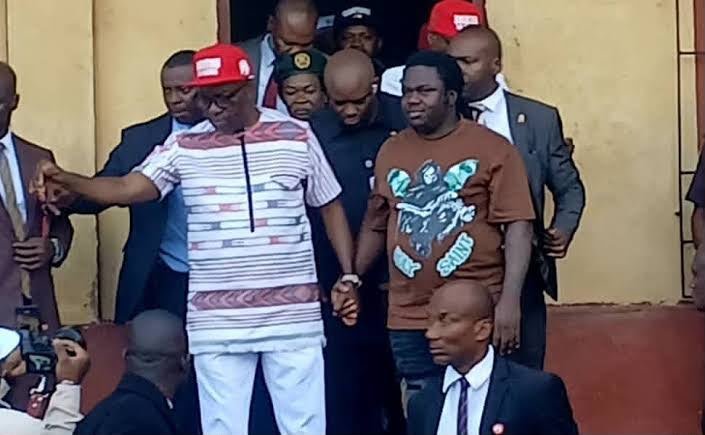
On September 18, 2026, Soludo visited the Amawbia Correctional Centre and granted Nwangwu early release, remitting the remaining portion of his prison term. The governor also appointed him Ambassador for Youth Reformation in Anambra State.
It was an unexpected turn in a story that had appeared headed in one direction.
Nwangwu had been arrested in February 2025 during the Anambra State Government’s crackdown on activities linked to native doctors, quick-wealth schemes and alleged ritual practices. He later entered a plea bargain with the state and was convicted.
His troubles did not end with the court proceedings. In February 2026, his shrine in Oba, Idemili South Local Government Area, was demolished following legal proceedings. The place that had once formed part of his public identity was reduced to ruins.
For a man whose name had become associated with influence and material success, the fall was steep.
But his story did not end behind prison walls. According to Anambra State Attorney-General Tobechukwu Nweke, the pardon followed considerations including Nwangwu’s plea bargain, remorse, rehabilitation and the need to reintegrate him into society.
That decision has now placed a very different responsibility on the man who once attracted attention with the image of sudden wealth and spiritual power.
He is being asked to speak to young people about another kind of power: the power to change direction.
It is a difficult assignment because public memory can be stubborn. A new title does not automatically erase an old reputation. A prison gate can open in a moment, but rebuilding trust takes considerably longer.
This is where Nwangwu’s next chapter becomes more compelling than his previous one.
His new role will put him before young people at a time when the hunger for quick wealth remains visible across Nigerian society.
Social media has made luxury look closer than it is, while stories of overnight success can make patience appear like failure.
Nwangwu knows the attraction of that world from experience. He also knows how quickly the road can change.
That experience could become his strongest message if he chooses to use it honestly.
Chinua Achebe, one of Africa’s most celebrated writers, once wrote, “A man who does not know where the rain began to beat him cannot know where he dried his body.”
For Nwangwu, the rain has already fallen heavily.
The question now is whether he can look back without becoming trapped by what lies behind him.
His appointment also raises a wider question about rehabilitation. Can a person whose past became a public controversy become a credible voice for young people trying to avoid similar mistakes?
Credibility will have to come through conduct, consistency and the willingness to confront the past rather than decorate it.
That may be the real weight of the opportunity Soludo has placed before him.
The governor has opened the door, but Nwangwu must decide what he does after walking through it.
His old shrine may be gone. His old image may never completely disappear. Yet a man is not always condemned to remain the person his worst chapter made him.
Igbo wisdom says, onye kwe, chi ya ekwe. (when a person agrees to change his course, his destiny can respond.)
For Akwa Okuko, the second chance has arrived. The harder part begins now.






Leave a comment