Bulgaria Elects Its First Female President, but the Question of Women’s Place Remains
“Are you sure she can handle the job?”
It is a question women still encounter when they pursue positions traditionally occupied by men. Sometimes, it is spoken openly; sometimes, it hides behind polite smiles.
On November 1, Bulgaria made history by electing Iliana Iotova as its first female president. She secured 57.6 per cent of the votes, defeating Andrey Gyurov.
Her victory was more than another election result. It reopened a conversation about women, leadership, ambition and the invisible boundaries society continues placing around them.
Imagine two colleagues discussing the appointment of a woman to a senior position.
“She’s now the managing director?”
“Yes. She worked for it.”
“I hope she won’t become difficult to work with.”
“Would you say that if a man got the appointment?”
That exchange reveals an uncomfortable contradiction. Women are encouraged to succeed, provided their success does not make somebody else uncomfortable.

A man may enter a room and be asked about his plans. A woman entering the same room may first face questions about her family.
For generations, the ladder to leadership has stood against a wall women were expected to admire from a distance. Some climbed regardless.
Liberia’s Ellen Johnson Sirleaf was one of those women. In 2006, she became Africa’s first elected female head of state.
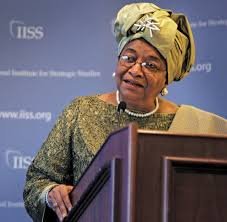
Ellen Johnson Sirleaf, Africa’s first elected elected head of state
At Harvard University’s 2011 commencement, she explained why the absence of female predecessors never discouraged her presidential ambition.
“I was never deterred from running for president just because there had never been any females elected head of state in Africa,” she said.
She offered another memorable reminder: “Just because something has not been done yet, doesn’t mean it can’t be.”
Namibia has also written its name into this history through President Netumbo Nandi-Ndaitwah, who became the country’s first female president on March 21, 2025.

Netumbo Nandi- Ndaitwah, Namibia’s first female president
Her inauguration marked another important milestone for African women seeking greater representation in national leadership.
However, Nandi-Ndaitwah made an important distinction when discussing her achievement. She insisted that her election was based on merit, not simply her gender.
“I was not elected because I am a woman, but on merit,” she said. (NAMPA)
Her position deserves attention. Women deserve opportunities, but they also deserve recognition for their abilities, experience and contributions.
Representation may open the door, but competence determines what happens after someone walks through it.
In Nigeria, the conversation extends beyond presidential buildings and corporate boardrooms. It is visible in workplaces, businesses, relationships and homes.
A woman may present an excellent idea during a meeting, only for everyone to ignore it until a male colleague repeats the suggestion.
Another may become financially independent and discover that her success has become a source of discomfort in her relationship.
Chimamanda Ngozi Adichie captured this social conditioning in We Should All Be Feminists.
“We teach girls to shrink themselves, to make themselves smaller,” she said. “We say to girls, ‘You can have ambition, but not too much.’”
Society sometimes hands women a microphone with one hand and places a finger on their lips with the other.
Speaking with AfricaWorldnews, Mrs Veronica Akamba, an entrepreneur from Cross River State who resides in Lagos, described her excitement about Bulgaria’s historic announcement.
She said she was over the moon when she heard that a woman had become president, adding that the news renewed her belief in her own possibilities.
“The sky is not even my limit,” Akamba declared.
She encouraged women to wake up, stand up and go out into the world to make themselves proud, regardless of their size or gender.
Her reaction illustrates the power of representation. Sometimes, seeing another woman cross a difficult bridge gives someone else the courage to begin her own journey.
But what does success mean to a woman who has no interest in politics, corporate management or public office?
Mr Joseph Moha, a businessman from Imo State, offered another perspective while speaking with AfricaWorldnews.
He explained that he deeply appreciates his wife, although she does not work in his company or occupy a political position.
Moha sometimes travels abroad to purchase goods for his business. During those periods, his wife manages their home, cares for their children and maintains family stability.
He considers her contribution valuable and says he supports her in whatever ways he can.
Personally, he prefers their present family arrangement, where he provides financially while his wife concentrates on managing their home.
His perspective introduces another side of the discussion. Women’s contributions cannot be reduced to salaries, professional titles or positions in government.
A woman can thrive as a farmer, fashion designer, chef, trader, entrepreneur or homemaker. She can build a business, feed communities, create employment, manage a household or pursue public leadership.

Success has many addresses, and not all of them come with office suits, company vehicles or executive chairs.
The market woman calculating her profits, the fashion designer growing a clothing brand and the farmer working under the sun are contributing meaningfully.
So is the homemaker whose decisions, care and daily responsibilities help sustain a family. Their achievements should never be treated as smaller simply because they happen outside corporate offices.
Of course, choosing homemaking should not mean denying a woman opportunities, just as pursuing a career should not attract guilt. Respect, choice and mutual support matter.
Ngozi Okonjo-Iweala, the first woman and African to lead the World Trade Organisation, has encouraged women to pursue leadership and create opportunities.
“If you have a sense of purpose that drives you, then aim high and become a leader and make the room as you go,” she advised.
The late American Supreme Court Justice Ruth Bader Ginsburg expressed a similar conviction: “Women belong in all places where decisions are being made. It shouldn’t be that women are the exception.”
Leadership, however, must come with accountability. Women in public office should be judged by their decisions and performance, just as men are.
The real problem is the expectation that women must repeatedly prove they deserve opportunities that others receive without similar interrogation.
A girl should not need to become the first female president before she believes leadership is possible.
Bulgaria has added Iliana Iotova to its presidential history, while Namibia has already celebrated Netumbo Nandi-Ndaitwah’s place in Africa’s political story.
Beyond those presidential buildings, millions of women are making their own history in classrooms, markets, farms, businesses and homes.
Their contributions deserve recognition, their choices deserve respect, and their possibilities should never be restricted by somebody else’s definition of what a woman can become.