By: Chioma Madonna Ndukwu
Independence Day at 66: A Proud Nation Still Waiting for Its Promise
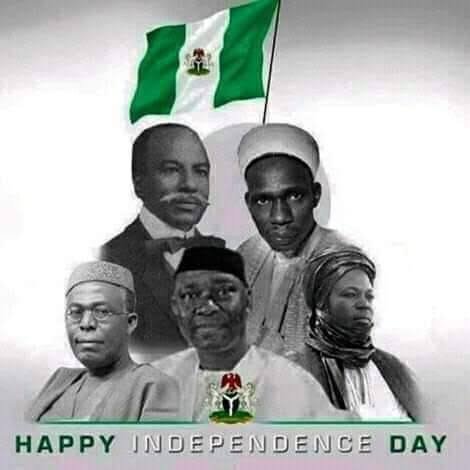
Every October 1, Nigeria raises the green-white-green and remembers the morning in 1960 when colonial rule ended and a young nation stepped into the difficult freedom it had long desired.
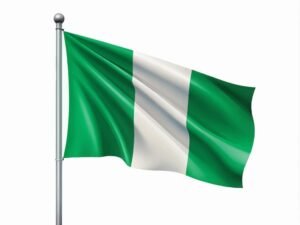
Sixty-six years later, the flag still commands pride, but beneath the ceremonies lies a more complicated national conversation about what independence has delivered and what Nigerians are still waiting to experience.
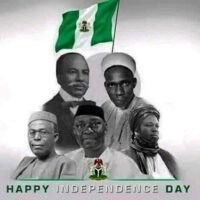
Sir Abubakar Tafawa Balewa, speaking on Independence Day in 1960, described Nigeria as having acquired its “rightful status” and expressed confidence that its people would know how to use independence.
Those words carried both celebration and responsibility because independence was never meant to be the final destination. It was supposed to open the gate to a country where citizens could shape their own future.
Four years later, Dr Nnamdi Azikiwe offered another warning that sounds remarkably relevant today, describing Nigeria as standing “at a fork in the crossroad of history,” with one path leading towards division and another towards unity.
Azikiwe’s words remind Nigerians that nation-building is not a finished building handed over with the keys. It is a house that every generation must repair, expand and protect from those who would weaken its foundations.
The economic reality makes that unfinished journey difficult to ignore. Nigeria’s economy has recorded stronger growth and improved macroeconomic stability, yet the World Bank says household incomes have not fully recovered and poverty remains high.
For the ordinary citizen, economic statistics become meaningful only when they cross the bridge into the kitchen, the classroom, the hospital, the workshop and the family budget.
Employment remains another major concern, especially for young Nigerians entering a labour market that struggles to create enough productive opportunities.
A nation cannot fully celebrate economic freedom while talented young people spend years searching for work or surviving through precarious jobs.
Security adds another heavy stone to the national burden. Banditry, kidnapping, insurgency and separatist agitations continue to affect communities in different parts of the country, making safety an essential part of what Nigerians expect from freedom.
Speaking in Imo State, Chinweuba Okparandu said insecurity remains a major concern for citizens, particularly when fear interferes with movement, business and the ordinary routines through which people earn a living.
For many families, security is not an abstract national debate; it is the phone call made when a loved one is travelling, the decision about whether a child can return home late and the calculation before opening a business.
In Rivers State, Samuel Odum expressed hope in Nigeria’s future, pointing to the resilience of Nigerians and the possibilities that can emerge when young people are given room to create, work, innovate and contribute.
That optimism deserves attention because Nigeria’s greatest resource is not buried beneath its soil. It is visible in classrooms, studios, farms, laboratories, workshops, offices and small businesses where people continue to build despite difficult circumstances.
Education must therefore remain at the heart of the independence story. A country that wants technological advancement, industrial growth and global competitiveness must give its children the knowledge and skills required to create rather than merely consume.
Healthcare belongs in the same conversation because national progress means little to a family that cannot obtain affordable treatment when illness arrives.
Strong hospitals, trained professionals, medicines and accessible care are part of the infrastructure of human dignity.
Nigeria’s cultural strength also remains one of its brightest lamps. Its languages, literature, music, cinema, festivals, traditional institutions and contemporary creativity continue to give the country a voice far beyond its borders.
Yet culture alone cannot carry the weight of development, just as prayer alone cannot build the future.
Faith should meet hard work, innovation and enterprise, because a nation must turn its hopes into systems, products, institutions and opportunities.
Prayer should meet innovation in the laboratory, discipline in the office, creativity in business, knowledge in the classroom and excellence in public service.
Spirituality becomes more fruitful when it inspires people to work with their hands as confidently as they lift them in prayer.
The responsibility also falls heavily on those entrusted with leadership. Nigeria cannot unlock its promise while corruption, poor accountability, inflated contracts, abandoned projects, favouritism and the careless management of public resources continue to weaken confidence in government.
Public office should be treated as stewardship, not ownership. The resources of the country belong to the people, and every naira poorly deployed represents a road that may remain unfinished, a school that may lack equipment or a hospital that may lose what it needed to save a life.
Citizens, too, have a part to play. Nigeria cannot be repaired entirely from government offices, because the character of a nation is also shaped by teachers who teach well, workers who show up, entrepreneurs who create honestly and citizens who refuse to normalise wrongdoing.
At 66, Nigeria has travelled through military coups, a civil war, economic crises, political transitions and decades of democratic rule, yet the country remains standing.
Its survival is itself part of the national story, but survival must eventually give way to stronger development.
The Nigeria Nigerians hope for does not require abandoning the country they love. It requires building upon its strengths while confronting the weaknesses that have kept too many citizens waiting at the doorstep of prosperity.
The promise of independence should not remain like a sealed parcel passed from one generation to another.
It should gradually open into safer communities, productive jobs, quality education, reliable healthcare, stronger institutions and a life of greater dignity.
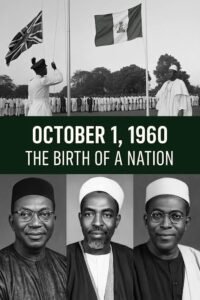
So, as Nigeria marks 66 years of independence, celebration should walk beside reflection. The green-white-green deserves to fly proudly, but beneath it must grow the Nigeria that those who fought for independence imagined and the generations after them still long to see.
Sources: Sir Abubakar Tafawa Balewa’s 1960 Independence Day address; Dr Nnamdi Azikiwe’s 1964 Independence Day speech; World Bank Nigeria country and economic updates.