624,000 Children Still Out of School as UNICEF Calls for Urgent Action
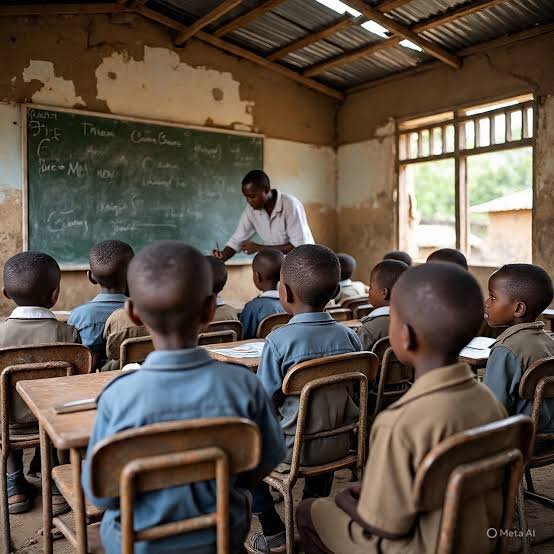
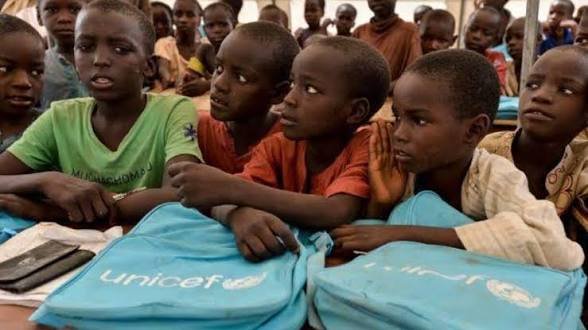
The United Nations Children’s Fund (UNICEF) has called for stronger government intervention after identifying about 624,000 children who are not attending school across Sokoto, Kebbi and Zamfara states.

Although approximately 68,000 children have benefited from programmes aimed at returning them to the classroom, the organisation says thousands more remain without access to formal education.
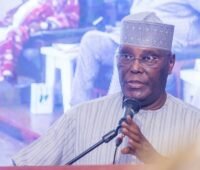
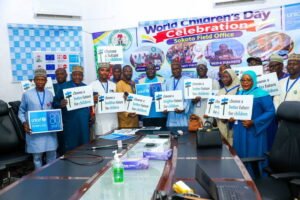
UNICEF’s Chief of Field Office in Sokoto, Dr Michael Juma, disclosed the figures during a media briefing organised ahead of the 2026 World Children’s Day celebration.
He urged the governments of the three states to increase education funding and work with community leaders, religious institutions, journalists and development partners to address the problem.
Juma said the media had an important responsibility to draw attention to issues affecting children, investigate gaps in public services and ensure that authorities were held accountable for their commitments.
He also called on journalists to report on children’s access to healthcare, nutrition, education and other basic necessities, rather than limiting their coverage to official announcements.
On educational support, Juma disclosed that about 98,000 children had benefited from UNICEF’s Teaching at the Right Level programme, which focuses on improving reading and numeracy skills.
Other interventions include teacher training, the distribution of instructional materials, accelerated basic education, integrated Qur’anic education and learning opportunities through radio and the Nigeria Learning Passport.
He explained that these programmes were particularly important for children whose education had been disrupted by insecurity, displacement and emergencies.
The UNICEF official also highlighted progress in healthcare delivery, revealing that approximately 7.8 million children across the three states had received measles-rubella vaccinations, while more than five million were reached during the last polio immunisation campaign.
In Kebbi State, about 148,000 children had received the first dose of malaria vaccine, while 130,000 had received the second dose.
On efforts to tackle malnutrition, Juma praised the Sokoto and Zamfara governments for committing N100 million and N500 million respectively towards purchasing Ready-to-Use Therapeutic Food for children suffering from severe acute malnutrition.
He also acknowledged Kebbi State’s N540 million contribution towards free medical services for children.
According to him, UNICEF-supported health insurance programmes had extended coverage to approximately 86,000 beneficiaries in Zamfara, 18,000 in Sokoto and 10,000 in Kebbi.
The organisation is also supporting child protection measures through legislation, Family Court Rules and social protection policies designed to safeguard vulnerable children, including those in conflict with the law.
Juma further disclosed that a Special Care Baby Unit had been established in Sokoto, with similar projects being pursued in Kebbi and Zamfara to improve care for premature and low-birth-weight babies.
Despite these interventions, he maintained that getting the remaining out-of-school children into classrooms was still a major challenge.
“Identifying these children is only the first step. The real challenge is ensuring that they return to school and remain there to acquire the knowledge and skills necessary for their future,” he said.
He acknowledged that declining international development funding had created difficulties for organisations working in several countries but assured that UNICEF was exploring ways to mobilise resources and sustain its programmes.
He added that education interventions across the three states had not been affected by the funding decline experienced earlier in the year.
On reaching children in remote and insecurity-affected communities, Juma said UNICEF was working with government agencies, field facilitators and independent monitoring teams to ensure that vulnerable families received assistance.
He called for greater participation from parents, traditional rulers, religious leaders and community organisations, stressing that children’s welfare could not be left to government agencies and development organisations alone.
He also encouraged journalists to participate in future field visits to assess projects supported by UNICEF and report independently on their impact.
Juma urged media organisations to support the December 5–11, 2026 polio immunisation campaign by educating communities and encouraging parents to make eligible children available for vaccination.
The briefing was part of activities marking the 2026 World Children’s Day, celebrated under the theme, “My Day. My Rights. My Future.”
UNICEF said improving children’s lives would require sustained funding, effective public services and accountability, warning that the future of the region depended on how well its children were protected, educated and supported.