Africa Must Invest in Minds, Not Oil and Cocoa, Ogundipe Tells Universities
Africa’s ability to compete globally will depend more on the quality of its education, research and leadership than its abundant natural resources, Professor Oluwatoyin Ogundipe has said.
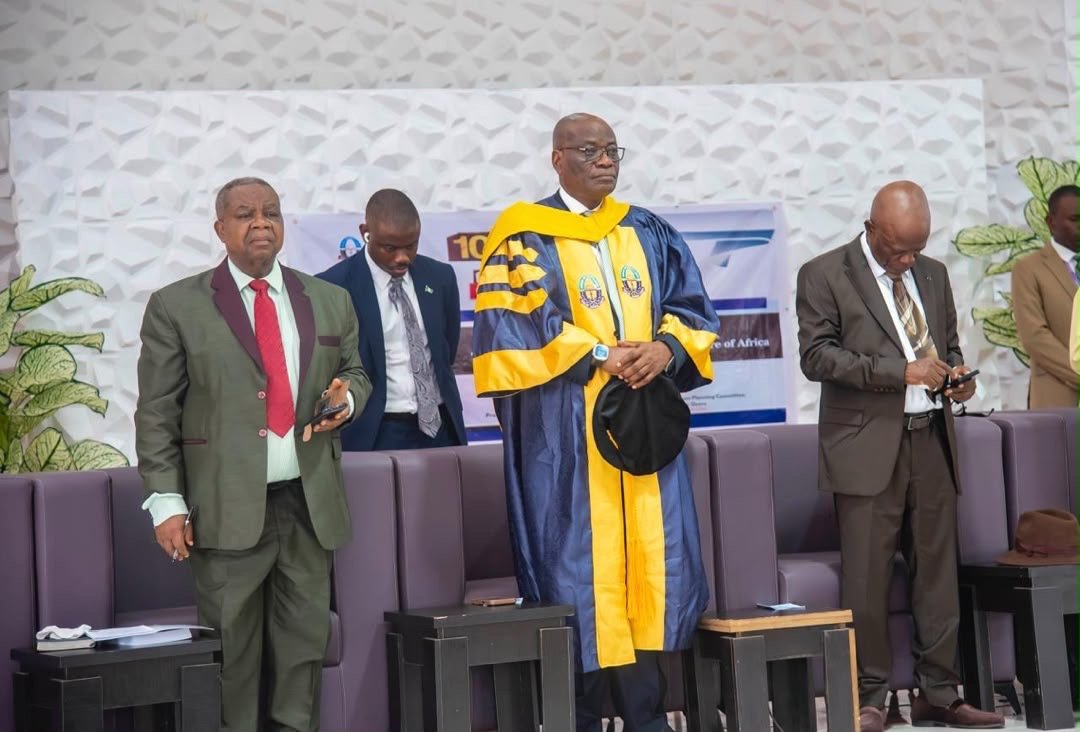
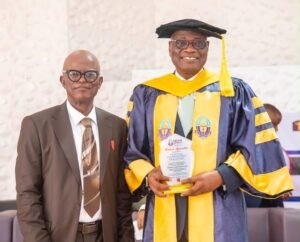
Ogundipe, Chairman of the Governing Board of the National Universities Commission (NUC) and former Vice-Chancellor of the University of Lagos, made the observation while delivering the 2026 convocation lecture at Anchor University, Ayobo, Lagos, on Friday.
His lecture, titled ANCHOR@10: University Education, Transformational Leadership and the Future of Africa, examined the responsibility of higher institutions in preparing the continent for economic growth, technological advancement and responsible governance.
According to him, Africa’s long-term prosperity cannot depend on commodities such as crude oil, cobalt and cocoa, but on its ability to develop knowledge, encourage innovation and produce responsible leaders.
“Our prosperity will not rest on crude oil, cobalt or cocoa. It will rest on our capacity to generate knowledge, nurture innovation and raise ethical, courageous leaders, equal to the demands of an increasingly complex world,” he said.
The former university administrator argued that global competitiveness was increasingly determined by intellectual capacity rather than the volume of natural resources available to individual countries.
Reflecting on Anchor University’s first decade, Ogundipe said the institution was established with a vision to develop young Nigerians and Africans through faith, character and academic excellence.
He compared the university’s name to a ship’s anchor, explaining that although the instrument does not propel or direct a vessel, it keeps it stable when difficult conditions arise.
He challenged the institution to examine its achievements over the past ten years, particularly the quality of graduates it had produced and the values it had instilled in them.
“This anniversary, therefore, is not merely an occasion for celebration. It is a moment for reflection and for resolve,” he said.
Ogundipe warned that countries that fail to strengthen their universities risk undermining their own development prospects, describing Africa’s difficulties as largely connected to weak institutions and leadership.
He observed that despite possessing considerable natural and human resources, many African countries continued to struggle with unemployment, poverty, inadequate infrastructure, fragile institutions and governance challenges.
The professor also expressed concern about the continent’s limited contribution to global manufacturing and knowledge production, noting its continued dependence on exporting raw materials while importing finished products and specialised expertise.
He identified human capital development, knowledge creation and ethical education as essential foundations for addressing Africa’s development challenges.
Ogundipe maintained that universities must go beyond academic instruction by deliberately teaching graduates moral judgement, civic responsibility and commitment to public service.
He also urged higher institutions to reconsider traditional teaching methods, warning that graduates who depend exclusively on knowledge acquired in lecture rooms could struggle to remain relevant in rapidly changing industries.
According to him, universities must become centres where research findings are converted into practical solutions, commercial products and employment opportunities.
“Universities must become hubs of innovation, enterprise and technological adaptation, places where research becomes solutions, solutions become products and products become livelihoods,” he stated.
He further emphasised the importance of research-driven universities, explaining that institutions must prioritise original discoveries and knowledge production rather than repeatedly relying on existing academic materials.
He also called for stronger connections between universities and their immediate environments, stressing that academic programmes should address the economic, cultural and social needs of their communities.
On leadership, Ogundipe described integrity, accountability and personal example as essential qualities for anyone entrusted with managing institutions.
He explained that while effective leadership requires competence and courage, faith and a sense of responsibility to God provide an additional moral foundation.
He encouraged Anchor University to build on its first ten years by pursuing greater recognition in teaching, research, technological innovation and leadership development.
Among the priorities he identified were digital transformation, stronger industry relationships, international academic partnerships and increased investment in research.
He also urged the institution to establish practical connections between academic training and employment through internships, business incubation programmes and curricula developed alongside industry professionals.
Ogundipe further challenged the university to extend its influence beyond its campus, ensuring that residents of Ayobo, Lagos State and Nigeria benefited meaningfully from its educational and research activities.
“Anchor University need not wait a century to matter. It can matter now,” he declared.
Addressing the graduating students, the professor encouraged them to place their confidence in God and allow their values to guide their decisions as they entered the next phase of their lives.
He reminded them that graduation represented the beginning of greater responsibilities, urging them to distinguish themselves through competence, relevance and meaningful contributions to society.
“The world does not reward those who are merely qualified; it rewards those who are indispensable,” Ogundipe told the graduates.