Plateau Killings: 28 Dead as Curfew Fails to Stop Fresh Attacks
At least 28 people have been killed in a renewed wave of attacks across Plateau State, with fresh violence recorded despite a dusk-to-dawn curfew imposed by the state government.

The attacks have affected communities in Mangu, Bokkos and Barkin Ladi, leaving residents frightened and disrupting farming, cattle rearing, mining and other economic activities.
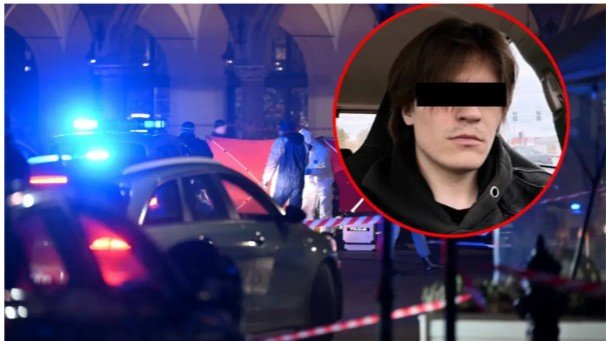
The latest attack occurred on Sunday evening in Bukuru, Jos South Local Government Area, where gunmen opened fire on a vehicle carrying Fulani herders.
Two people were killed while six others sustained injuries in the attack, which occurred around Total filling station in the area.
Ibrahim Yusuf Babayo, Plateau State chairman of the Miyetti Allah Cattle Breeders Association of Nigeria, confirmed the incident in Jos.
Babayo said the victims were returning from the cattle market to Bassa Local Government Area when gunmen attacked their vehicle at about 5:30pm.
He described the incident as disturbing and unprovoked, urging security agencies to investigate the attack and bring those responsible to justice.
The injured victims were taken to hospital for treatment, while one person was reportedly missing after the attack.
The incident came less than two weeks after five Fulani herders were killed and another injured around Kassa community in Barkin Ladi.
Plateau Curfew Fails To Stop Killings
The Plateau State Government introduced the curfew on September 21 following growing insecurity across Mangu, Bokkos and Barkin Ladi.
The restriction requires residents to remain indoors between 6pm and 6am daily, with the government saying the measure would help security agencies stabilise the affected communities.
Authorities also imposed a motorcycle ban in the affected areas and directed security personnel to enforce the restrictions.
Despite these measures, several attacks have been recorded, raising concerns about the ability of the curfew and existing security arrangements to protect residents.
The violence has claimed the lives of farmers, herders, miners, vigilantes and other residents, while cattle have also been killed or reportedly rustled.
More Plateau Attacks After Curfew
The killings began almost immediately before and after the curfew was announced.
On September 20, five Fulani herders were reportedly killed at Kassa community in Barkin Ladi while transporting cattle from Bokkos towards Jos South.
The state government announced the curfew the following day.
On September 22, gunmen reportedly ambushed security operatives attached to Operation Rainbow along Gagshi Road, killing a police officer.
Three Berom farmers were also reportedly killed at Rakok community in Barkin Ladi that day, while three Mwaghavul vigilantes were ambushed and killed around the Kyikyau-Gyambwas boundary in Mangu.
Two Berom miners were killed at Gangare community in Barkin Ladi on September 23 while working at a mining site.
A 27-year-old Fulani herder was killed around Banka village in Mangu the following day, while about 30 cattle were reportedly rustled.
On September 25, three vigilantes, including a youth leader, were killed when gunmen allegedly attacked Kassa community around 1am.
The incident reportedly sparked protests, with residents expressing anger over continued attacks despite the presence of security personnel.
Five miners were killed and two others injured on September 26 after gunmen reportedly ambushed them at Marit community in Barkin Ladi.
Another attack occurred on September 27 at Lamor in the Pushit District of Mangu, where more than 20 cattle were reportedly killed.
Several other cattle were injured, while more than 70 were said to be missing after the incident.
A Fulani herder was also reportedly killed around Rakung village in Barkin Ladi on the same day.
On September 28, three women working at a mining site in Rakum community, Barkin Ladi, were killed in another gun attack.
A 14-year-old Fulani herder, Aliyu Ismail, was reportedly killed around Wereng community in Riyom Local Government Area on October 1.
Two Berom men from Heipang District, Barkin Ladi, were also shot dead at a mining site around Kuru Jenta on October 3.
Farmers And Herders Abandon Livelihoods
The prolonged insecurity has affected farming and cattle rearing across several communities, with residents avoiding locations they consider unsafe.
Farmers say they can no longer travel freely to distant farms, while herders have restricted cattle movement because of fears of attacks and rustling.
Paul David, a resident of Dorowa Babuje in Barkin Ladi, said fear had made farming increasingly difficult.
He said residents could no longer safely access farmlands located away from their communities because they were uncertain about who might attack them.
Habibu Ibrahim, a herder in Lugere, Barkin Ladi, said cattle owners were facing similar difficulties because travelling long distances exposed them to danger.
Christopher Rafan, a farmer from Bokkos, said the insecurity had forced farmers to change some traditional farming practices.
According to him, some residents now avoid planting tall crops close to their communities because such crops can obstruct visibility and make it harder to detect approaching attackers.
He appealed for stronger security in rural communities that remain vulnerable to attacks.
Plateau Crisis Has Deep Historical Roots
The latest violence is linked to longstanding tensions involving farmer-herder disputes, land ownership, community boundaries and the indigene-settler question.
Relations between Berom and Fulani communities have remained tense for years, with both sides repeatedly accusing members of the other community of attacks and reprisals.
The crisis also has an ethno-religious dimension dating back to the violent conflict that erupted in Jos in September 2001.
That conflict left many people dead and displaced thousands, deepening mistrust between Christian and Muslim communities.
Over the years, the violence has spread into rural areas, where disputes over farming, grazing and access to land have contributed to repeated attacks.
A committee established by Governor Caleb Mutfwang and chaired by retired General Nicholas Rogers reportedly estimated that about 11,000 people had been killed in Plateau over two decades.
Governments and civil society groups have introduced several peacebuilding initiatives, including community dialogue, mediation and local conflict-resolution programmes.
Organisations such as the Centre for Humanitarian Dialogue, Youth Initiative Against Violence and Human Rights Abuse, CLEEN Foundation and Justice, Development and Peace Commission have supported some of those efforts.
Peace agreements have also been reached in some affected areas, including Riyom and Barkin Ladi, covering issues such as responsible grazing, early reporting and community cooperation.
However, the latest attacks have exposed continuing challenges in maintaining those peace arrangements.
The Executive Director of YIAVHA, Pwakim Jacob Choji, said more investment was needed in social cohesion and dialogue between communities.
The Director of the Civil Liberties Organisation, Steve Aluko, called for stronger enforcement, better intelligence and improved security coverage in difficult rural terrain.
Aluko also advocated state policing and a regional security structure that would strengthen intelligence gathering and the deployment of security personnel.
Professor Shedrack Best, Vice Chancellor of Plateau State University, Bokkos, said young people should be given a bigger role in peacebuilding efforts.
Best, a professor of International Relations and Peace Building, said many existing programmes focused mainly on traditional, religious and community leaders while young people remained underrepresented.

With 28 people reportedly killed amid continued attacks, residents are seeking stronger protection as authorities and peacebuilding groups work to prevent another cycle of violence across Plateau State.