Brazil Election: Dispute Over Patron Saint Sparks Religious Tension
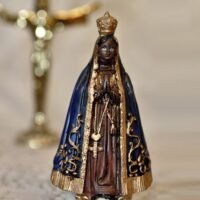
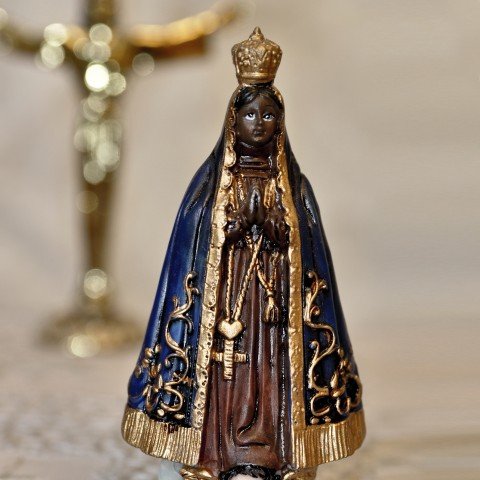
A dispute over Brazil’s patron saint, Our Lady of Aparecida, has become an unexpected issue in the final days of the country’s presidential election.
President Luiz Inácio Lula da Silva and his challenger, Flávio Bolsonaro, are facing voters on Sunday in a closely contested race that has brought religion into the centre of the campaign.
The controversy follows speculation that Bolsonaro could seek to remove Our Lady of Aparecida from her position as Brazil’s patroness if he wins the election.
The issue gained attention after Bolsonaro said during a recent broadcast that one of his first actions as president would be to “decree that Brazil belongs to the Lord Jesus Christ.”
Some Catholics interpreted the statement as a possible indication that the evangelical politician could challenge the status of Aparecida.
Bolsonaro has denied the allegation, describing reports that he intends to remove the patroness as “fake news” and accusing supporters of Lula and Brazil’s Catholic bishops’ organisation of spreading the claim.
The Episcopal Conference of Brazil has rejected the accusation, while the dispute has continued to generate concern among some Catholics.
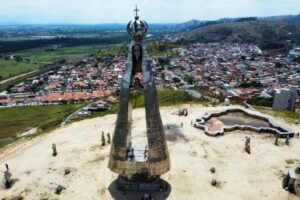
Our Lady of Aparecida was declared Brazil’s patroness by the Vatican in 1930 and has remained an important symbol of Catholic faith and Brazilian identity.
Lula has responded to the controversy by defending the saint and emphasising the need for respect between different religious communities.
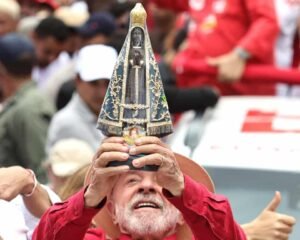
“As long as I’m president, no one will disrespect Our Lady of Aparecida. No one. People need to learn to respect all religions,” Lula said during a campaign rally in the Amazon.
The president has also appeared at campaign events holding statues of the Virgin Mary, while his wife, Janja da Silva, has worn a pendant associated with Our Lady of Aparecida.
Lula’s running mate, Geraldo Alckmin, has also sought to reassure Catholic voters who expressed concern over reports about the possible removal of the patroness.
Alckmin said he had received messages from Catholics worried about the direction of the country and assured them that religious traditions considered sacred by Brazilian families would be protected.
The controversy comes as Brazil’s religious landscape continues to change, with evangelical Christianity having expanded significantly since the 1980s and gaining greater political influence.
Political analyst Thomas Traumann said the dispute had touched concerns among Catholics about the growing influence of evangelicals, particularly within Bolsonaro’s political movement.
Catholics make up nearly 57 per cent of Brazil’s population, while evangelicals account for about 30 per cent, according to figures cited in the report.
Historian Luiz Antônio Simas said the reaction to the controversy demonstrated the deep cultural importance of Our Lady of Aparecida in Brazilian society.
He said her influence extends beyond Catholic worship into areas such as samba, football and Afro-Brazilian religious traditions.
Simas also recalled a 1995 incident in which a neo-Pentecostal pastor kicked a statue of Our Lady of Aparecida during a television programme, triggering widespread criticism.
The historian said the fact that Aparecida is represented as a Black Madonna also gives the debate a racial dimension, particularly in discussions about Brazilian culture and religious identity.
The current controversy has therefore grown beyond the question of a religious title, becoming part of a wider debate about faith, culture and political identity as Brazil approaches its presidential vote.
While Bolsonaro maintains that he has no intention of removing Our Lady of Aparecida, Lula has continued to defend the patroness as the two candidates make their final appeals to voters.