

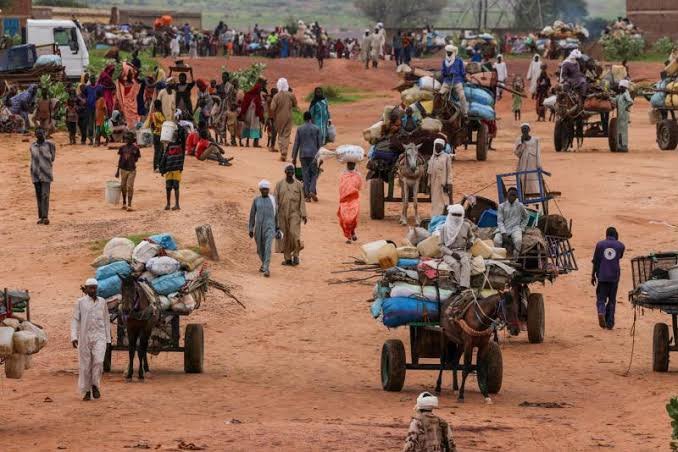
More than 55,000 people have fled Sudan into neighbouring Chad since the beginning of 2026 as renewed fighting and worsening security conditions force families to abandon their homes, the United Nations refugee agency has said.
The latest influx has sharply increased in recent days, with more than 400 people crossing through the Adre and Tine border areas each day over the past week.
Mamadou Dian Balde, the UN regional refugee coordinator for the Sudan conflict, said the current daily crossings were almost 20 times higher than the numbers recorded in recent months.
The surge comes as violence continues across Sudan, particularly in Darfur, where civilians remain exposed to fighting and deteriorating security.
Balde also pointed to clashes, airstrikes and drone attacks in Kordofan and Blue Nile states as factors driving more people from their communities.
Sudan has been engulfed in war since April 2023, when fighting broke out between the Sudanese Armed Forces and the Rapid Support Forces. The conflict has created one of the world’s largest displacement crises.
Nearly one million Sudanese refugees have crossed into Chad since the war began, while millions more have been displaced within Sudan or have sought safety in other neighbouring countries.
UNHCR estimates that about 11.3 million people have been forcibly displaced by the conflict, including approximately 6.4 million people who remain displaced within Sudan.
The refugee agency said more than 3.5 million Sudanese have crossed into countries across the region in search of protection and shelter.
However, the humanitarian response is facing a major funding gap. UNHCR said it had received only 18 per cent of the $1.6 billion required for its regional refugee response plan.
Balde warned that without greater humanitarian assistance, worsening conditions could leave displaced Sudanese facing increasingly difficult choices, including returning home before lasting peace is secured or attempting dangerous journeys elsewhere.
The continuing movement of refugees into Chad is placing additional pressure on communities and humanitarian agencies already struggling to provide food, shelter, healthcare and protection along the border.











Leave a comment