

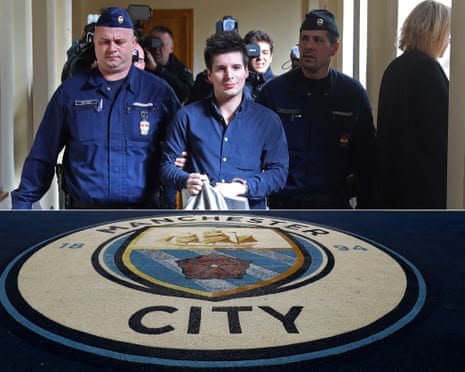
Long before Manchester City faced a major Premier League financial case, Portuguese computer enthusiast Rui Pinto had already gathered millions of confidential documents from football’s private world.
Pinto became internationally known after creating Football Leaks, an online platform that published sensitive information about clubs, players, agents and football administrators across several European countries.
Working under the pseudonym “John”, Pinto supplied enormous quantities of material to journalists between 2015 and 2018, exposing financial arrangements and private dealings within elite football.
Some of the most consequential documents concerned Manchester City, whose financial arrangements came under scrutiny after material obtained by Pinto reached German publication Der Spiegel.
Reports published in 2018 alleged that certain Manchester City sponsorship arrangements had been structured in ways that could potentially circumvent UEFA’s Financial Fair Play regulations.
Manchester City denied the allegations and maintained that the leaked documents had been obtained illegally and did not provide an accurate picture of its financial affairs.
UEFA subsequently investigated the club and, in 2020, found Manchester City guilty of Financial Fair Play breaches, imposing a two-year European competition ban and €30 million fine.
Manchester City appealed to the Court of Arbitration for Sport, which overturned the European ban and reduced UEFA’s original financial penalty to €10 million.
CAS said some allegations had either not been established or were time-barred, while also finding that Manchester City had failed to cooperate properly with UEFA’s investigation.
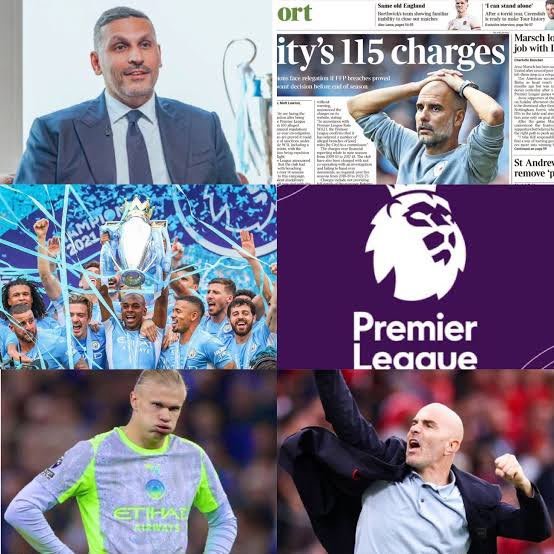
The Premier League later conducted its own investigation before charging Manchester City with 115 alleged financial rule breaches covering the period between 2009 and 2018.
The club denied the allegations throughout the proceedings, meaning the existence of Football Leaks documents did not itself establish that every Premier League charge had been proven.
Pinto’s archive reportedly contained tens of millions of documents, giving investigative journalists access to information involving some of football’s most powerful clubs and influential figures.
The material was shared with the European Investigative Collaborations network, allowing reporters from different countries to examine the documents and produce coordinated investigations.
Football Leaks extended beyond Manchester City, with documents involving prominent players such as Lionel Messi and Neymar, football agents, clubs and controversial ownership arrangements.
The archive also contained information concerning plans for a proposed European Super League, adding another major dimension to Pinto’s growing influence on football reporting.
Pinto’s activities eventually attracted law-enforcement attention, leading to his arrest in Budapest, Hungary, in January 2019 during an investigation into his activities.
He was later extradited to Portugal, where he spent about a year in pre-trial detention before entering into discussions with investigators about his evidence.
In 2023, a Portuguese court sentenced Pinto to four years in prison, suspended, after convicting him of offences including attempted extortion and unlawful access.
The case included allegations that Pinto sought between €500,000 and €1 million from Doyen Sports in exchange for withholding potentially damaging information from publication.
Pinto presented himself as a whistleblower who had exposed information he believed deserved public attention, although Portuguese prosecutors challenged his methods of obtaining the material.
He later agreed to assist Portuguese investigators and provided access to encrypted hard drives containing information gathered during his Football Leaks activities.
Pinto subsequently became a protected witness, giving authorities access to material that had previously remained encrypted and potentially providing further evidence about his digital activities.
His legal troubles continued after the 2023 conviction, although a separate case involving 241 charges eventually ended with his acquittal.
Pinto’s activities also extended beyond football, with his material contributing to the Luanda Leaks investigation into financial dealings surrounding Isabel dos Santos.
His supporters regard him as an important source for investigative journalism, while critics focus on the unlawful access to private systems and correspondence.
The contrasting views have made Pinto one of the most controversial figures associated with modern football journalism and investigations into the sport’s financial structures.
His name remains closely connected to Manchester City because documents obtained through Football Leaks helped journalists examine allegations that later became part of wider investigations.
The Premier League’s case against Manchester City developed separately from UEFA’s earlier proceedings, with the club continuing to contest the allegations through the legal process.
Pinto’s story demonstrates how information obtained from private digital systems can travel from encrypted computers into newsrooms, investigations, courtrooms and football’s biggest financial disputes.
Whatever the final legal outcomes, Football Leaks permanently changed the conversation around secrecy, money and accountability in elite football, while making Pinto a central figure.











Leave a comment