

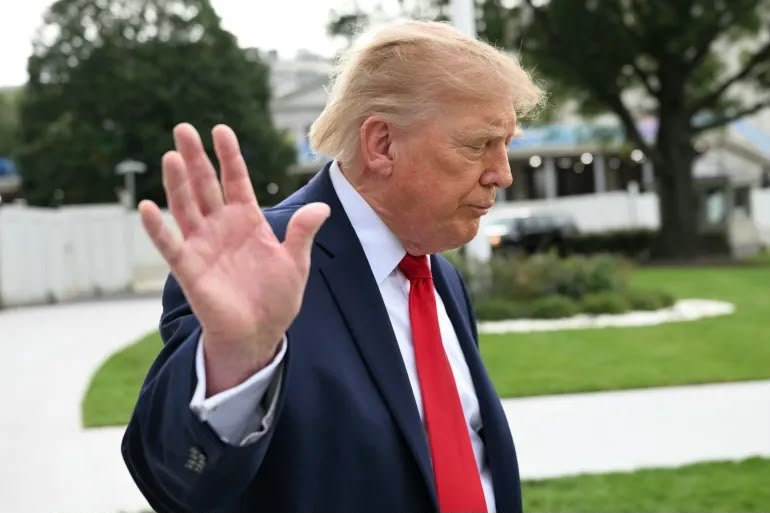
US President Donald Trump has rejected an Iranian proposal that would reopen the Strait of Hormuz and suspend fighting across the Middle East within seven days.
Iran made the proposal during the United Nations General Assembly in New York, saying it had been passed to Washington through Qatari mediators.
Iranian Foreign Minister Abbas Araqchi said the plan was ready to take effect if the United States agreed to the terms.
“If there is seriousness on the US side to come to a deal and reopen the Strait of Hormuz, everything is now prepared,” Araqchi told reporters on Friday.
Trump gave the proposal a different reception.
Speaking to reporters at the White House on Saturday, he confirmed that he had rejected the Iranian offer.
“I reject their proposal. I rejected their deal,” Trump said before leaving for Tennessee.
He argued that Tehran was seeking the immediate reopening of the waterway because the disruption had cut deeply into Iran’s economic income.
“They want to make a deal to open the Hormuz Strait immediately because they’re losing so badly,” Trump said, insisting that the United States was making significant gains in the conflict.
The Strait of Hormuz remains central to the confrontation because of its importance to international oil shipments. The conflict and restrictions on movement through the waterway have reduced oil flows and created wider economic pressure.
Washington has maintained an economic blockade against Iran, while Trump has continued to assert that the United States controls the strategic passage.
Iran’s proposal called for a seven-day countdown after an agreement, leading to the reopening of the strait and a pause in regional hostilities. Araqchi said broader negotiations could then follow on issues agreed upon by the parties.
Iran’s nuclear programme could form part of those discussions.
Trump has insisted that Iran must not develop a nuclear weapon, while Tehran has maintained that it will not surrender its nuclear rights, including uranium enrichment.
An Iranian official told Reuters that Iran would not agree to send its highly enriched uranium out of the country, even if Washington accepted the proposed peace arrangement.
Iranian President Masoud Pezeshkian said Tehran remained willing to discuss its nuclear programme and other outstanding issues but would not accept pressure or coercion.
“Iran is not seeking war, but will defend itself against pressure, threats and attacks,” Pezeshkian said.
The conflict began on February 28 following US and Israeli attacks and has since moved through periods of reduced fighting and fresh military strikes.
The fighting has caused thousands of deaths, weakened Iran’s conventional military capabilities and placed further strain on its economy.
The conflict has also spread across the region, with Iran launching drone and missile attacks against US allies in the Gulf.
The Houthis in Yemen, who are aligned with Iran, have also targeted Saudi interests, further widening the confrontation.
Trump’s rejection of Tehran’s latest proposal leaves negotiations over the Strait of Hormuz and the broader conflict unresolved.











Leave a comment